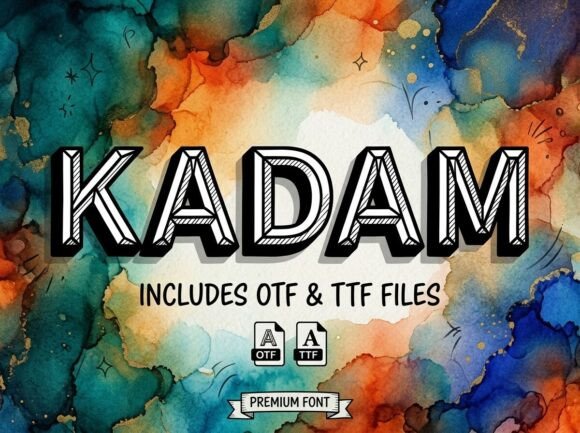
Kadam: Architectural Precision in a Modern Typeface
Understanding the Geometric Soul of Kadam
In the crowded world of modern typography, finding a display font that truly commands attention without sacrificing structural integrity is a challenge. Kadam rises to this occasion with a striking, architectural presence. This is not merely a collection of letters; it is a system of forms built on a foundation of geometry and perspective. The defining characteristic of Kadam is its use of isometric projection, a technique that renders three-dimensional objects on a two-dimensional plane. Each letterform is constructed with bold, block-style elements, giving the typeface a substantial, physical weight. The hand-drawn hatching adds a layer of texture and authenticity, moving it beyond sterile digital precision into something that feels crafted and intentional. This creates a convincing sense of depth, making the text appear to occupy actual space rather than simply sitting on a surface.
The personality of Kadam is one of confidence and clarity. It speaks the language of design, engineering, and forward-thinking brands. For professionals seeking a typeface that conveys stability, innovation, and a modern aesthetic, Kadam offers a compelling solution. Its visual rhythm is steady and purposeful, making it an excellent tool for creating a strong visual hierarchy in any project. When you choose Kadam, you are not just selecting a font; you are adopting a design philosophy rooted in structure and stylized form.
Where Kadam Excels: Practical Applications for Designers and Creators
The true value of a creative font lies in its application. Kadam’s unique construction makes it exceptionally versatile across specific, high-impact projects. For independent architects and designers, this typeface is a natural fit for branding. A logo design using Kadam immediately communicates a firm’s commitment to precision and innovative thinking. It works beautifully on business cards, letterheads, and project proposals, establishing a cohesive and professional brand identity from the first point of contact.
Consider its power in editorial design and publishing. A tech-focused magazine or a design blog can use Kadam for headlines to instantly set a sophisticated, authoritative tone. The font’s dimensional quality draws the reader’s eye, establishing a clear entry point into the content. In the digital realm, its impact is equally pronounced. Think of social media graphics for a branding agency or a construction tech startup. A header set in Kadam stops the scroll, offering a polished, high-impact visual that stands apart from the noise. Its structured style is perfect for wayfinding signage in modern offices, co-working spaces, or galleries, where clarity and aesthetic appeal must coexist.
For entrepreneurs and small business owners, especially those in the tech, design, or manufacturing sectors, Kadam can be a cornerstone of your visual toolkit. It lends an air of established professionalism to packaging design, product labels, and website hero sections. The key is to match the font’s personality with your brand’s core message. If your brand values innovation, structure, and a modern edge, Kadam is a powerful asset.
Integrating Kadam Into Your Workflow: A Practical Guide
Adopting a new premium font into your projects requires thoughtful consideration. Before committing, evaluate how Kadam’s distinct character aligns with your project’s goals. Its bold, architectural nature makes it a specialist display font, ideal for headlines, logos, and short bursts of impactful text. It is not designed for long paragraphs of body copy, where a neutral serif font or sans serif font would ensure better readability.
A crucial step is testing font pairings. Kadam’s strong geometric voice pairs well with simpler, more understated typefaces. Try combining it with a clean sans serif font for body text to create a balanced contrast. The simplicity of the supporting font will allow Kadam’s intricate details to shine without overwhelming the viewer. Alternatively, a subtle script font or handwritten font could be used for accents to add a touch of human warmth alongside Kadam’s structured forms.
When you acquire Kadam, review the full package. A comprehensive commercial font license should include a variety of weights and styles. Look for italics, condensed versions, or alternates that can provide additional flexibility. Test the font across different sizes and mediums—what looks stunning on a large-format poster might lose its hatching detail on a small mobile screen. Ensure the legibility of individual characters, especially in contexts where quick reading is essential, like on signage.
Finally, consider the licensing. For any commercial project—from client work to your own business materials—you need a proper commercial license. This is a standard and ethical practice in the design industry, ensuring you have the legal right to use the font in your published work. Investing in a licensed copy of a quality font like Kadam is an investment in the professionalism and legal security of your projects.
In the end, choosing a typeface is a strategic decision. Kadam offers a unique blend of artistic flair and architectural rigor. By understanding its strengths and applying it thoughtfully, you can leverage this striking 3D display font to create memorable, high-impact designs that communicate with precision and style. It’s more than a design asset; it’s a statement about the quality and vision behind your work.