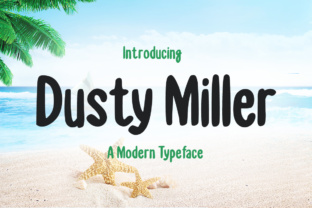
Dusty Miller: A Creative Font with Vintage Soul
Finding a typeface that feels both timeless and fresh can be a real challenge. You want something with character, a voice that stands out, but you also need it to work hard across different projects. That's where Dusty Miller comes in. It's a display font that immediately captures attention with its unique blend of vintage charm and modern sensibility. Think of it as the typographic equivalent of a perfectly worn leather jacket—full of personality, versatile, and always stylish.
Understanding the Visual Language of Dusty Miller
At its core, Dusty Miller is a serif font, but it’s far from ordinary. Its letterforms are characterized by slightly condensed proportions and sturdy, confident serifs that provide excellent structure. What sets it apart is the subtle imperfection in its strokes. You’ll notice gentle variations in thickness and just a hint of texture, as if the letters were carefully crafted rather than digitally perfected. This gives it an organic, almost human touch. The overall effect is a typeface that feels both authoritative and approachable, making it incredibly adaptable. It doesn't shout; it speaks with a clear, resonant voice that commands respect without being loud.
Where Dusty Miller Truly Shines
The real strength of Dusty Miller lies in its versatility. As a premium font, it’s designed to elevate a wide range of creative work. For logo design and brand identity projects, it offers instant recognition. A startup or small business looking to establish a brand that feels established, trustworthy, and creative could build their entire visual system around this font. It pairs beautifully with clean sans serif fonts for body text, creating a beautiful contrast that enhances readability and visual hierarchy.
Its application extends far beyond logos. In editorial design, such as magazine headlines, book covers, or blog post titles, Dusty Miller adds a layer of sophistication and intrigue. It draws the reader’s eye and sets a compelling tone for the content that follows. For packaging design, especially for artisanal goods, gourmet foods, or craft beverages, this font communicates quality and craftsmanship. It suggests a story behind the product, which is a powerful tool for engaging consumers on an emotional level.
Don’t overlook its potential in digital spaces. While it excels in print, Dusty Miller can be a strategic choice for web design headers, hero sections, and call-to-action statements. It ensures key messages are memorable. Similarly, in social media graphics, it helps posts stand out in a crowded feed, conveying a brand’s unique personality instantly. For entrepreneurs and marketers, using a distinctive creative font like this consistently across platforms builds strong brand recognition over time.
Practical Guidance for Using Dusty Miller
Choosing the right font is a critical design decision. Here’s how to approach Dusty Miller for your next project. First, evaluate the project’s personality. Dusty Miller is ideal for brands and content that aim to feel authentic, creative, and slightly nostalgic. It might not be the best fit for a ultra-modern tech startup seeking a sleek, minimalist vibe, but it’s perfect for a boutique coffee shop, a freelance writer’s portfolio, or a handmade jewelry brand.
Next, test font pairings. A great practice is to pair Dusty Miller with a neutral sans serif font like Open Sans or Lato for longer paragraphs of text. This allows the display font to handle the headlines and key statements without overwhelming the reader. You could also experiment with pairing it with a simple script font for a touch of elegance in invitations or special announcements. Always create mockups to see how the fonts interact in context.
Review the included styles and weights. Many commercial fonts like Dusty Miller come with a family of variations—regular, bold, italic, and sometimes condensed or extended versions. Understanding these options gives you more tools to create visual hierarchy within your designs. For instance, using the bold weight for main headings and the regular weight for subheadings creates a clear and professional structure.
Readability is paramount. While Dusty Miller is highly legible at larger sizes typical for display use, it’s wise to avoid using it for long blocks of small text, such as website body copy or dense paragraphs in a brochure. Its detailed character is best appreciated when it has room to breathe. Always test your designs at the intended size and on the intended medium, whether it’s a printed brochure or a mobile phone screen.
Finally, consider the licensing. If you plan to use Dusty Miller for commercial projects—like a client’s logo, a product you sell, or marketing materials—you’ll need to ensure you have the proper commercial font license. Reputable font foundries provide clear licensing terms. Purchasing the correct license protects you legally and supports the talented type designers who create these valuable design assets.
The Lasting Value of a Strong Typeface
In a world saturated with visual noise, investing in a high-quality, distinctive font like Dusty Miller is an investment in clear communication. It’s more than just a collection of letters; it’s a tool for building perception, establishing consistency, and forging a connection with your audience. Whether you’re a designer crafting a client’s brand identity, a publisher setting the tone for a new book, or a small business owner creating your first set of social media graphics, the right typeface lays the foundation for everything you create. Dusty Miller offers a blend of reliability and personality that can help transform a good design into a great one, leaving a lasting impression that feels both professional and profoundly human.