Carol: A Decorative Display Font for High-Impact Design
When Your Project Needs to Command Attention
There are moments in design where subtlety isn't the goal. You need a typeface that doesn't just sit on the page but stands up and introduces itself. This is where a premium font like Carol finds its purpose. It's a decorative display font, crafted not for body text but for those singular, high-impact moments where a word or a short phrase needs to carry immense visual weight. Think of it as the typographic equivalent of a signature piece of jewelry—it’s not meant for everyday wear, but it defines an entire look when used.
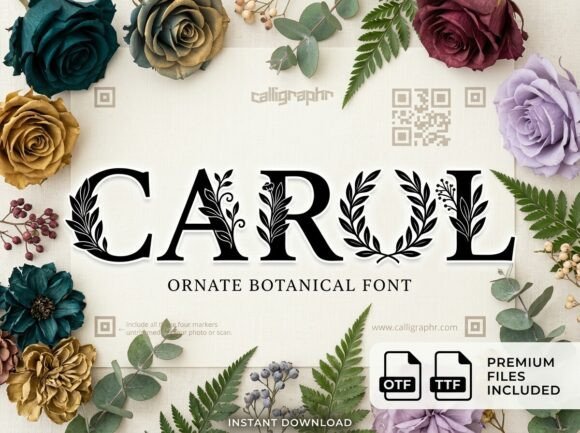
Carol’s personality is strong and artistic. Each letterform feels like a considered piece of illustration, with unique details that give it a distinct voice. It’s not a generic serif font or a common sans serif font; it sits in its own category as a creative font designed to be the center of attention. This makes it an exceptional choice for projects where brand identity and first impressions are paramount. The overall appeal is one of curated confidence—it’s polished, professional, and unapologetically bold.
Strategic Applications for Carol in the Real World
Understanding where a font like Carol excels is key to using it effectively. Its strength lies in applications where short bursts of text need maximum impact. Let's break down some practical scenarios across different fields.
Branding and Logo Design: This is Carol's sweet spot. For a startup, a boutique agency, or a luxury product, a logo set in Carol can establish an immediate sense of creativity and quality. Its artistic elements make it perfect for logos that need to be memorable and distinctive. It works particularly well for brands in the beauty, fashion, artisanal food, or creative consulting spaces. However, a crucial design observation: because Carol is an all-caps display typeface, its effectiveness in a logo hinges on the name being short and impactful. "ELEVATE" works; "NORTHWESTERN CREATIVE SOLUTIONS" would become a visual tongue-twister.
Marketing and Social Media Graphics: In the fast-scrolling world of social media, your headline has milliseconds to grab attention. Carol is built for this. Use it for the primary headline on a promotional graphic, a quote card, or a podcast episode title. Its strong visual personality ensures your message won't get lost in the noise. For a blog post header or a newsletter banner, it can set a compelling tone, drawing the reader in before they even process the subheading. Pair it with a clean, neutral sans serif font for body text to create a clear and engaging visual hierarchy.
Packaging and Editorial Design: Think about product packaging on a shelf. What makes you pick one item over another? Often, it's the typography. Carol could be the perfect choice for the product name on a box of artisan chocolates, a bottle of premium hot sauce, or a line of handmade soaps. It communicates care and craftsmanship. In publishing, it’s less about the chapter text and more about the cover. A book title or a magazine feature headline set in Carol can convey genre and mood instantly—be it mystery, romance, or contemporary fiction.
Practical Guidance for Implementation
Choosing a font is just the first step. Using it well requires a bit of strategy. Here’s how to approach working with a typeface like Carol.
Evaluating Fit and Font Pairing: Before you commit, ask yourself: does my project have a short, high-impact text element? If your primary need is for long-form paragraphs, Carol is not the right tool. Its value is in display use. When pairing it with other fonts, contrast is your friend. Because Carol has a strong decorative style, it pairs best with simple, understated companions. A classic serif font like Garamond or a geometric sans serif font like Montserrat can provide a stable foundation, allowing Carol’s headline to shine without creating visual competition. Avoid pairing it with other script fonts or highly decorative typefaces, as this will lead to clutter.
Understanding the Files and Licensing: The package includes both OTF and TTF files. The OTF (OpenType Font) file is the professional standard, offering superior compatibility with advanced design software like Adobe Creative Suite. The TTF (TrueType Font) file ensures universal compatibility, which is essential if you’re creating documents or graphics in programs like Microsoft Word or Canva that might need to be edited across different devices and operating systems.
Equally important is the commercial license. If you're using Carol for any project that generates revenue—whether it's a client's logo, your own business's packaging, or merchandise for sale—you need a commercial font license. This is a standard practice in the design world and protects both you and the font creator. Always review the license terms to ensure your use case is covered, especially for projects like app development, print-on-demand services, or large-scale distribution.
A Note on Readability: The "all-caps" nature of Carol is a deliberate design choice for display purposes. This is critical to remember. Setting an entire paragraph in all-caps drastically reduces readability because we recognize words largely by their shape, and the varying heights of lowercase letters create those shapes. Using all-caps for short lines is powerful; for long blocks of text, it becomes a barrier. Use Carol’s uppercase personality for the spotlight moments, and rely on other styles in your font pairing for the supporting roles. This approach respects the font's design intent and, more importantly, respects your audience's ability to easily consume your message.
In the end, a creative font like Carol is a specialized tool in your design assets toolkit. It’s not for every job, but for the right job, it can elevate a project from ordinary to unforgettable. Its strength is in its specificity, offering a way to inject a powerful dose of artistic personality into your brand identity, marketing materials, and creative projects. When you need a typeface that makes a statement, Carol is designed to be that statement.